
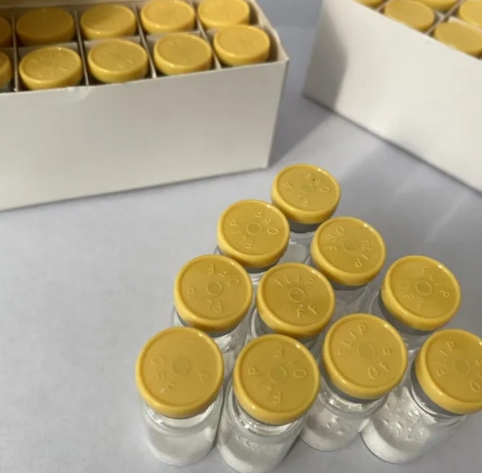
Description
Buy AICAR Peptide – Premium AMPK Activator for Metabolic Research
AICAR (Acadesine) – AMPK Activator Research Peptide
AICAR (5-Aminoimidazole-4-carboxamide ribonucleoside), also known as Acadesine, is a cell-permeable nucleoside analog and a well-established activator of AMP-activated protein kinase (AMPK), the central cellular energy sensor . By mimicking the metabolic effects of exercise, AICAR is a valuable research tool for investigating metabolic syndrome, diabetes, energy homeostasis, and age-related decline in physical performance . This research-grade compound is strictly for laboratory investigation and is not intended for human consumption.
Key Factual Details
| Attribute | Detail |
|---|---|
| Chemical Name | 5-Aminoimidazole-4-carboxamide ribonucleoside (Acadesine) |
| Molecular Formula | C₉H₁₄N₄O₅ |
| Molecular Weight | 258.23 g/mol |
| CAS Number | 2627-69-2 |
| Melting Point | 214-215°C |
| Purity | ≥98% (HPLC verified) |
| Solubility | H₂O: >10 mg/mL; DMSO: >10 mg/mL |
| Storage | −20°C; stable for up to 2 years as supplied |
| Classification | AMPK activator / AMP mimetic |
Mechanism of Action & Research Applications
AMPK Activation
AICAR enters cells via adenosine transporters and is phosphorylated by adenosine kinase to generate ZMP (AICAR monophosphate), an AMP mimetic . ZMP binds to the AMPKγ subunit, directly activating AMPK and triggering downstream metabolic pathways that regulate glucose and lipid metabolism, pro-inflammatory responses, cytokine production, cell proliferation, and apoptosis . AICAR promotes ligand-independent activation of the insulin receptor and induces skeletal muscle autophagy via activation of FoxO3a .
Research Applications:
-
Metabolic Studies: Investigating AMPK-mediated glucose uptake and insulin sensitivity
-
Endurance Research: Exploring exercise-mimetic effects on cellular energy regulation
-
Lipid Metabolism: Studying fatty acid oxidation and lipid homeostasis
-
Neuroinflammation: Examining AMPK’s role in neurogenesis and microglial activation
-
Cardioprotection: Investigating ischemia/reperfusion injury and vascular function
Research Parameters
All dosages are for in-vitro and preclinical research use only and are not intended for human consumption.
Mouse Model Dosage References :
| Model | Dosage | Route | Key Outcome |
|---|---|---|---|
| High-Fat Diet | 500 mg/kg | IP daily | Prevented neuropathy, 3-fold AMPK increase |
| LPS-induced sepsis | 500 mg/kg | IP 4h pre-LPS | Reduced TLR4-induced neutrophil activation |
| Sepsis (CLP) | 500 mg/kg | IP 1h & 6h post-CLP | Promoted mitochondrial biogenesis, improved survival |
| LPS model | 20 mg/kg | IP 6h post-LPS | Reduced vascular permeability |
| PM2.5 exposure | 200 mg/kg | IP daily (GD13-GD17) | Ameliorated hepatic lipid disorders |
| DOCA-salt hypertension | 100 mg/kg | SC daily for 21d | No significant BP change observed |
| Aged mice (23 mo) | 300-500 mg/kg | SC daily for 31d | Prevented decline in treadmill capacity |
Route Options: Intraperitoneal (IP), subcutaneous (SC), intravenous (IV)
Reconstitution: Dissolve in sterile saline or PBS (pH ~7.4); filter sterilize (0.22 μm) before use

Reviews
There are no reviews yet.